For a winter weekend in Yosemite, pack warm layers you can add and shed, a waterproof shell, insulated waterproof boots, simple traction cleats for icy paths, and tire chains for the car. Everything else can stay light, because the cozy parts of a winter weekend, the robes, the coffee, the warm beds, are already waiting at the cabin. Here's exactly what my husband Drew and I bring, and what you can leave at home.
If I had to name the one thing people forget, it's the right shoes. I always pack waterproof hiking shoes or snow boots for a winter weekend at the cabin: comfortable enough for a real hike, warm enough for a cold morning, and waterproof in case it snows or rains.
How cold is Yosemite in winter?
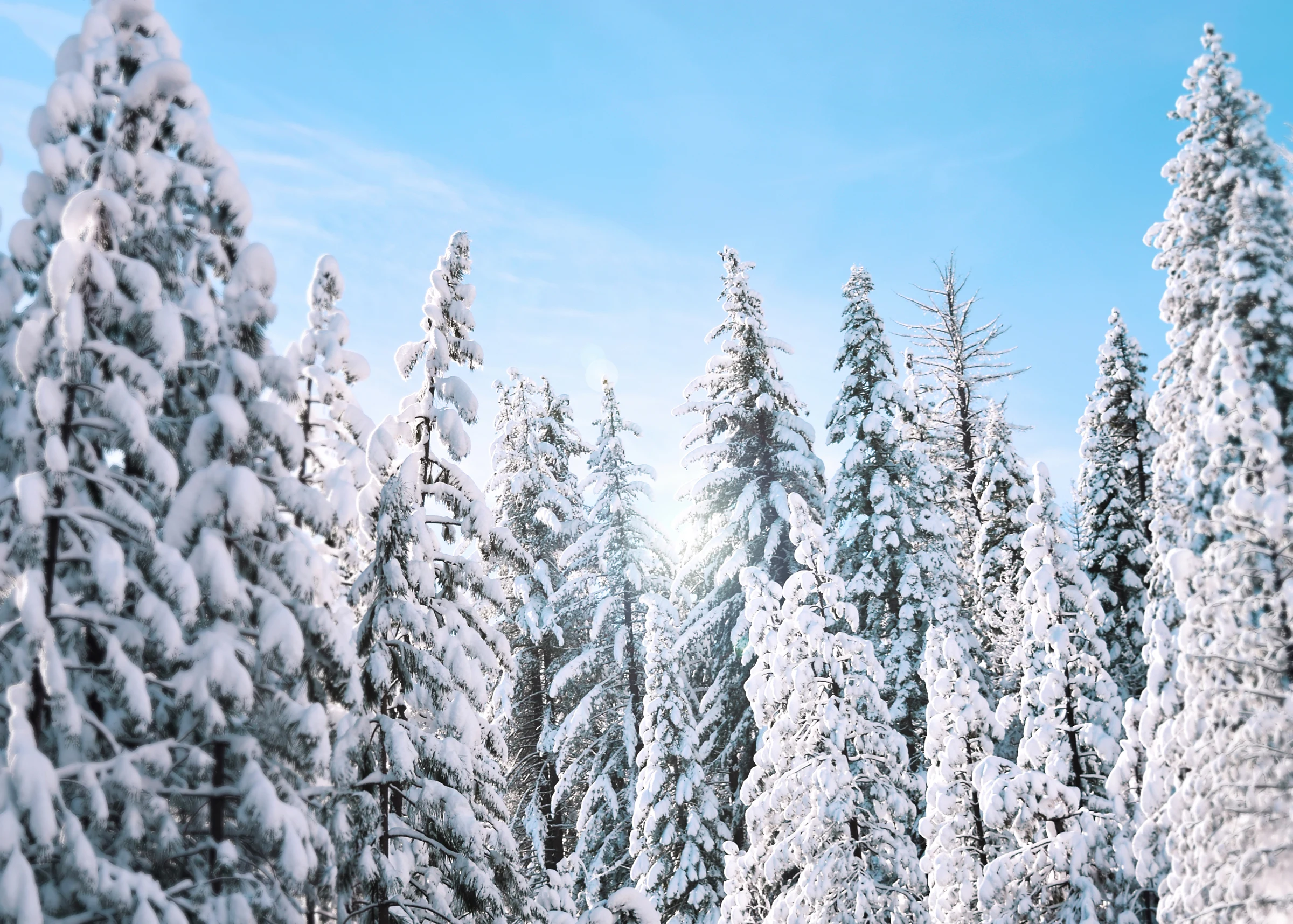
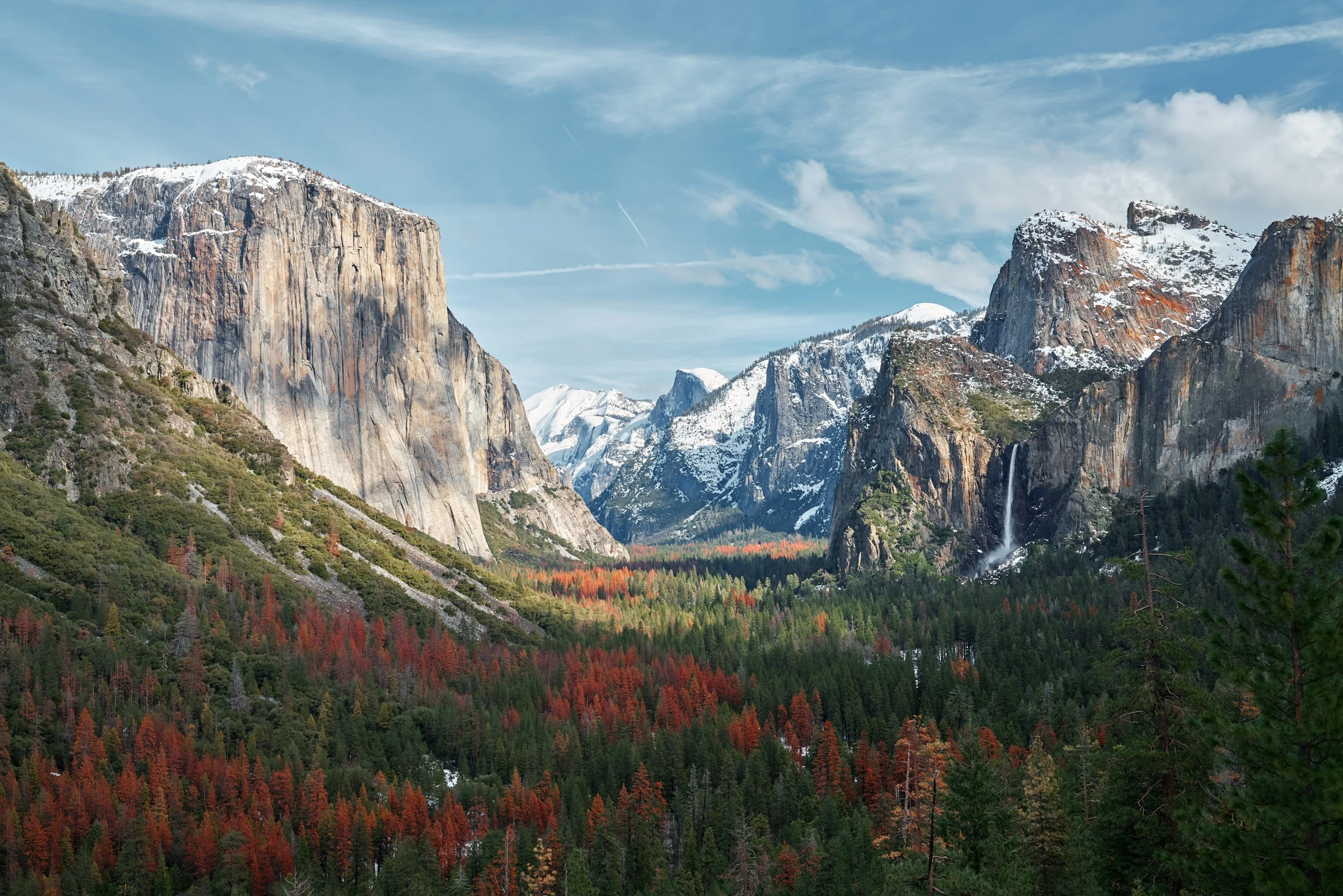
Cold, but rarely brutal at cabin level. The Park Service lists average highs of 46 to 51°F and lows of 28 to 30°F in Yosemite Valley from December through February. Wawona sits at about 4,000 feet, close to the Valley's elevation, so expect crisp, sunny days, frosty mornings, and storms that bring rain or a light snow at the cabin.
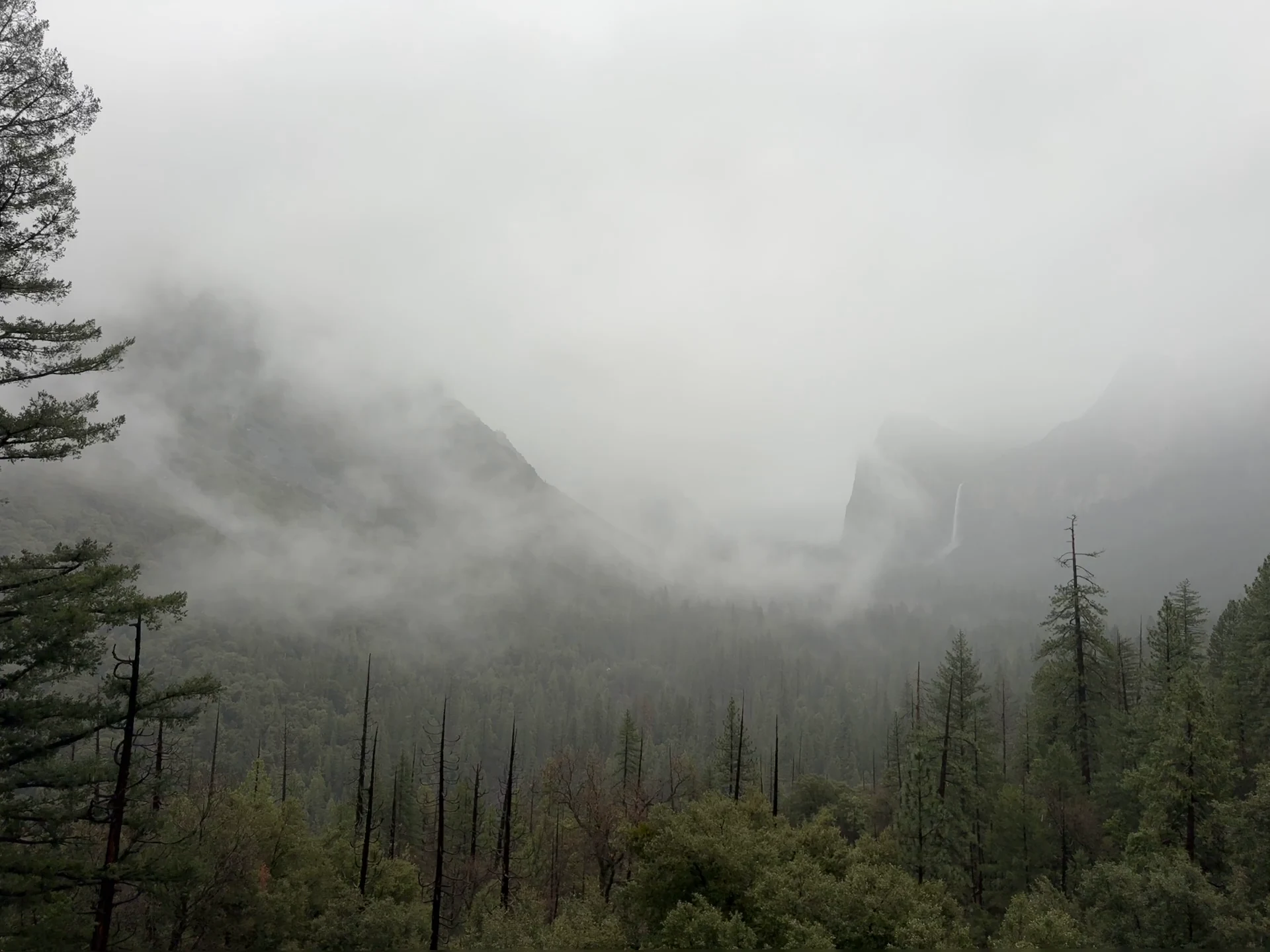
It gets colder fast as you climb. The road from Wawona to the Valley rises well above the cabin before it drops through the tunnel, and a rainy morning in Wawona can mean snow on the pass. Pack for the coldest place you plan to go that day, not the warmest.
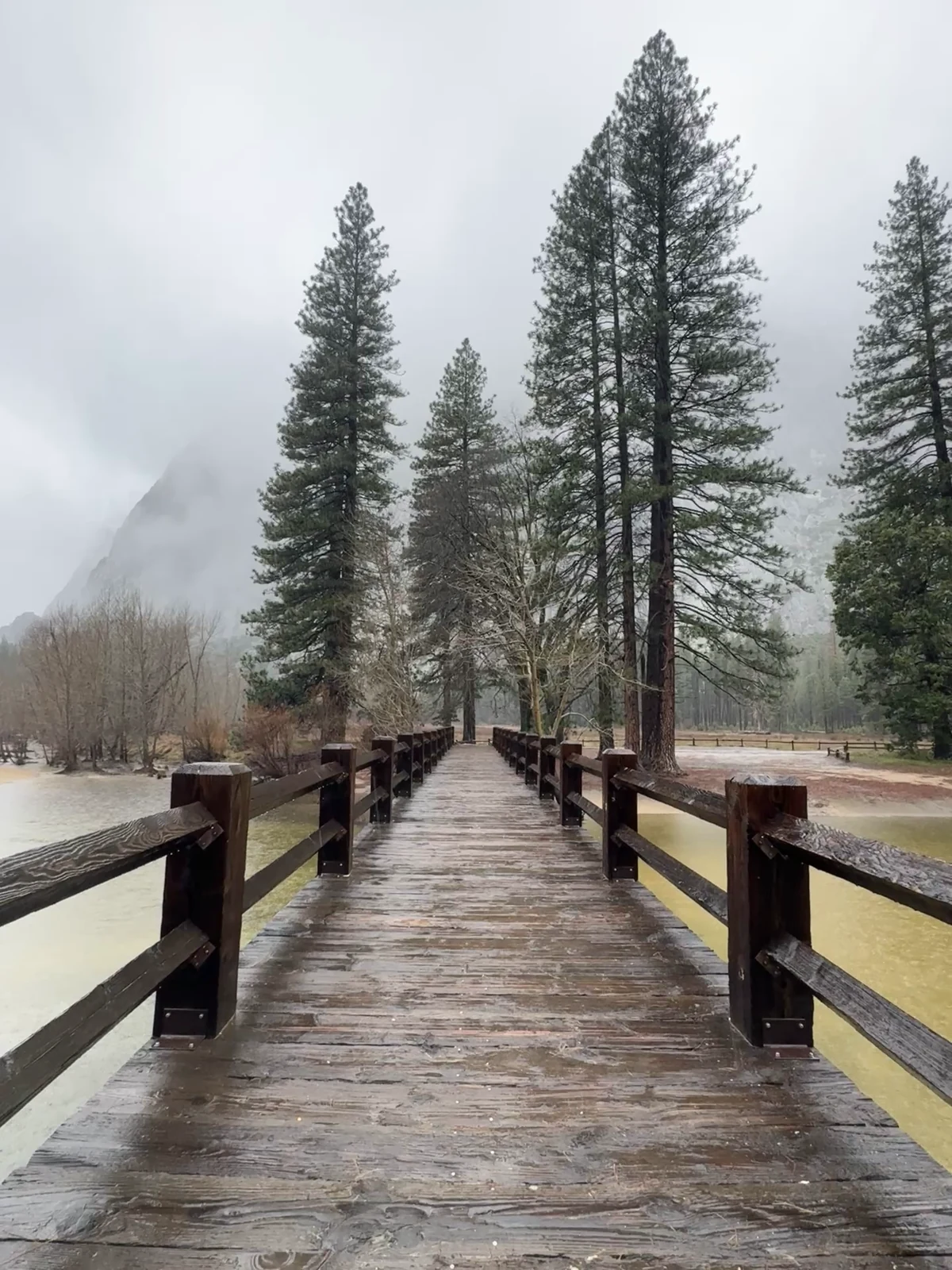
What to wear in Yosemite in winter
Layers, always. A winter day here can start below freezing, warm up in the afternoon sun, and drop again the minute the light leaves the meadow. Three layers let you adjust as you go:
- Base layer: merino wool or synthetic long-sleeve tops and leggings. Skip cotton next to your skin; once it's damp, it stays cold.
- Mid layer: a fleece or a light down or synthetic puffer for warmth.
- Outer shell: a waterproof, windproof jacket. Waterproof pants help on snowy walks and for anyone planning to sled or play in the snow.
- Extremities: a warm hat, gloves or mittens (plus a thin liner pair for photos), a neck gaiter or scarf, and wool socks, with one spare pair per day.
- Cabin clothes: something soft for the evenings, a swimsuit for the hot tub, and slippers or house shoes.
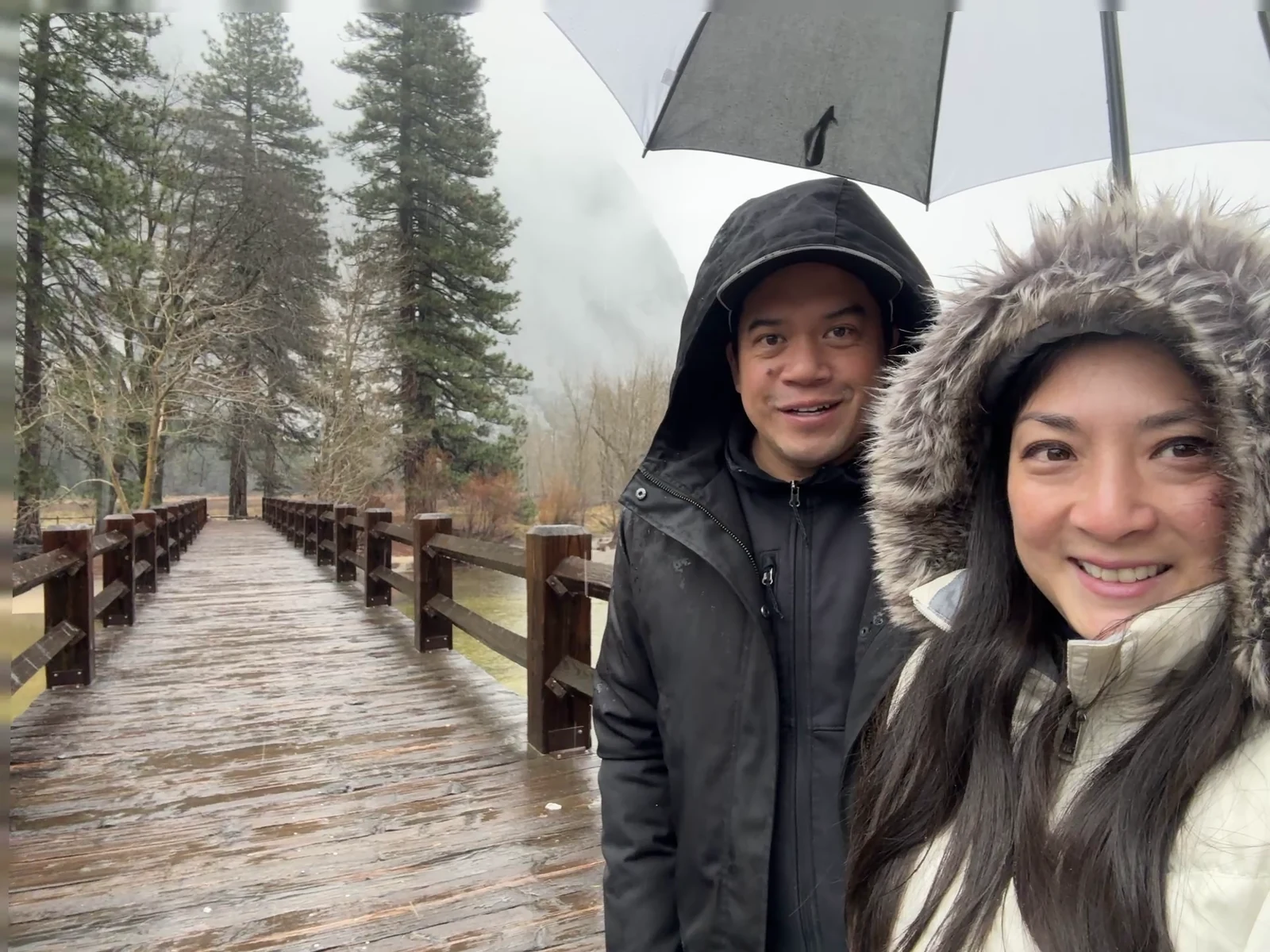
My own layers for a snowy walk in Wawona or the Mariposa Grove: a tank top or T-shirt, a thin long-sleeve thermal, and a sweatshirt or pullover. On top, I wear a thick waterproof puffer on the coldest days, or a thinner waterproof windbreaker when it's milder. You warm up quickly once you start hiking, so being able to peel off a layer makes all the difference. Drew, on the other hand, insists on wearing shorts no matter the weather. He's crazy, and I don't recommend it.
Do you need snow boots for Yosemite?
Yes, or at least waterproof hiking shoes with good tread, and it's the item I'd never leave home without. Insulated ones are better on snowy days. True snow boots are the most comfortable choice after a storm, while waterproof hiking boots work for most winter walks. Add a pair of slip-on traction cleats. Shaded trails and parking areas can stay icy long after a storm, and the Park Service notes that the Washburn Trail to the Mariposa Grove may be snowy or icy, and skis or snowshoes may be appropriate. Pack a second pair of shoes, too, so you have something dry while your boots warm up indoors.
Your winter car kit
In winter, the drive is part of the packing list. The question our guests ask most before a winter stay is about tire chains, and the answer is simple: bring them. The Park Service requires every vehicle to carry chains when chain controls are in effect, including four-wheel drive and rental cars. Our post on winter driving in Yosemite explains chain controls and the Highway 41 route in detail. Keep these in the car, too:
- Tire chains that fit your tires, plus gloves and a small mat to kneel on
- A headlamp or flashlight
- An ice scraper and a small snow brush
- Water, snacks and an extra warm layer, in case of a delay
- A phone charger, and your directions downloaded before Oakhurst, where cell service starts to fade
- A full tank of gas
We always suggest arriving before dark. The last stretch to the cabin is a quiet, unpaved forest road with no streetlights, and it's much easier to find in daylight.
What's already at the cabin (so you can pack lighter)
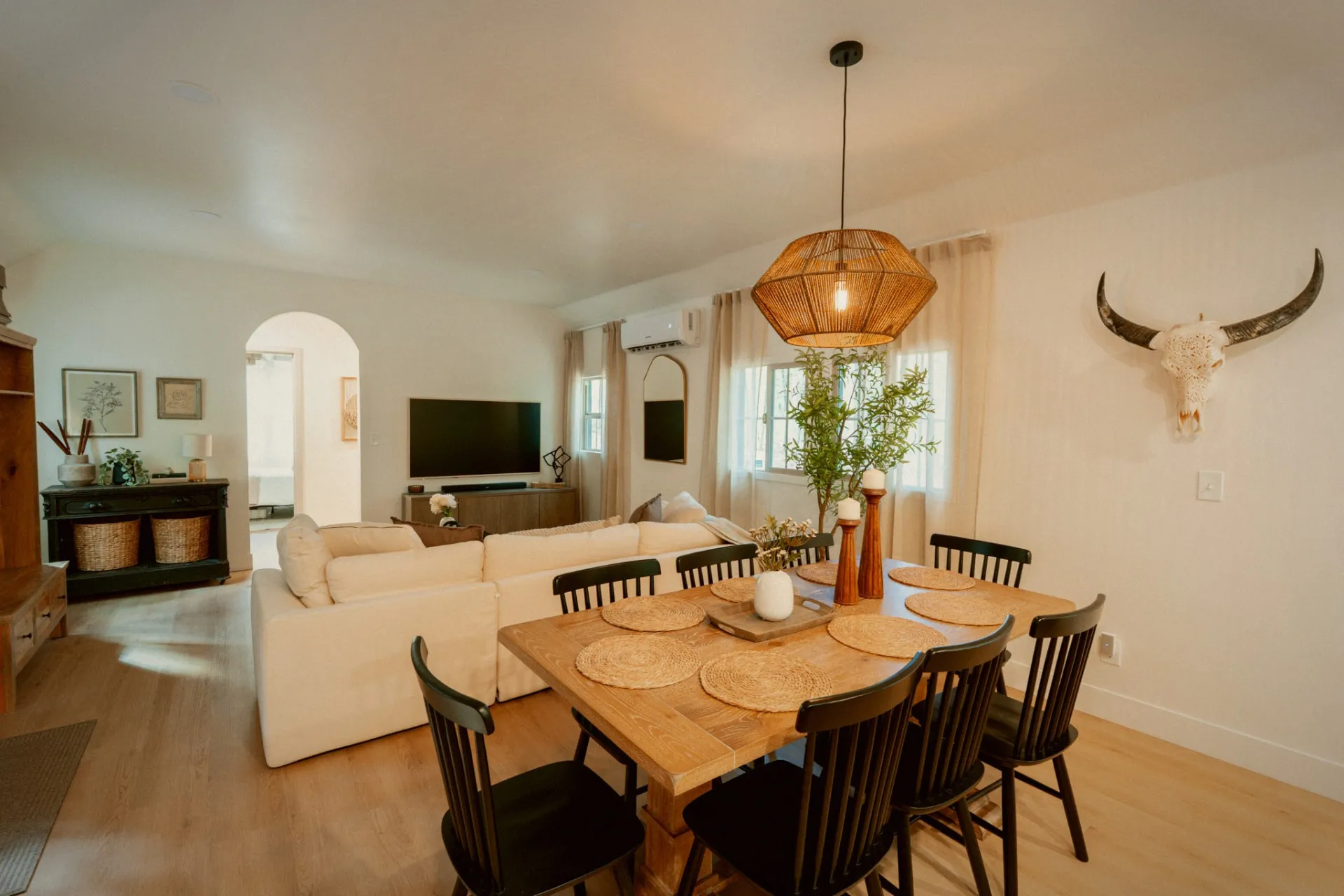
We set up The Wildernest Yosemite so a winter weekend feels easy the moment you walk in. You don't need to pack any of this:
- Robes and spa towels for everyone. Each guest has a bath towel, a spa towel and a spa robe, just right for the walk out to the hot tub on a cold night.
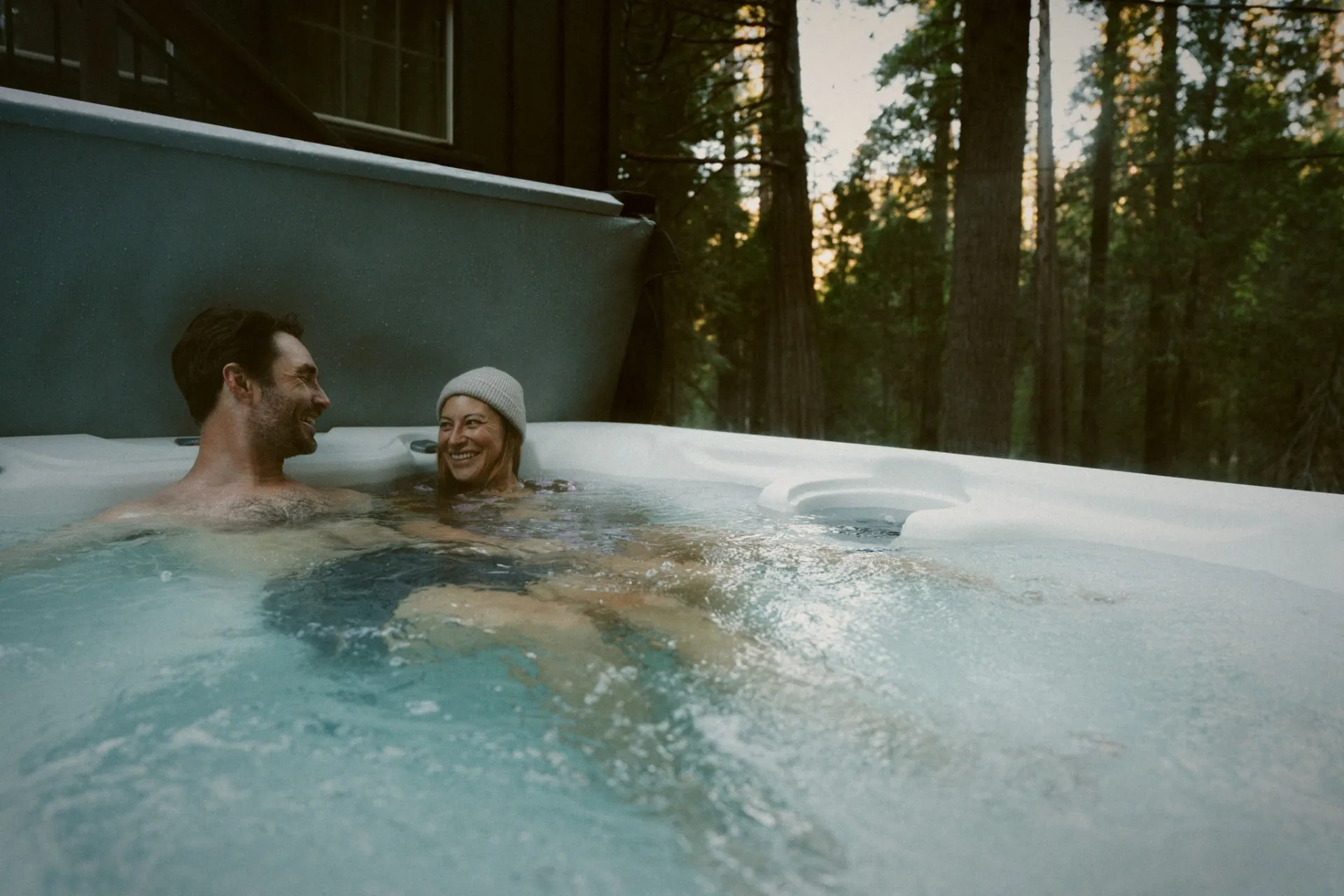
- A private hot tub kept at about 104°F, under the pines on the deck.
- Throw blankets and warm beds. Throws for the sofa, 100% organic cotton sheets, blackout shades and soft blankets.
- A heater in every room. Each room has its own heating unit, plus a portable space heater.
- Five ways to make coffee. Drip, pour-over, French press, cold brew and a Moka pot, with a Fellow electric kettle for tea and cocoa.
- A fully stocked kitchen with pots and pans, a rice cooker, oils, spices and hot sauces.
- A washer and dryer, so damp layers and socks are dry by morning.
- Toiletries and a hair dryer. Shampoo, conditioner, body wash and lotion are all provided.
- Board games and playing cards for long evenings in.
- A s'mores maker that needs no fire, plus a complimentary s'mores kit.
- Flashlights, umbrellas and a first aid kit.
- Starlink Wi-Fi and a backup generator, so the lights and heat stay on during a winter power outage.
What to bring that the cabin doesn't have
- Slippers or house shoes. We don't provide them, and you'll want them on cold floors.
- Your favorite coffee. We leave a little to get you started; if you drink it every day, bring your own beans or grounds.
- Groceries for the weekend. Stock up in Oakhurst, the last big town on Highway 41, which has Vons and Raley's. The small stores in Wawona are great for basics, but not for a full weekend.
- Foil and plastic wrap, if you'll need them. We don't usually stock them.
- Toys and puzzles for little ones. We have a Pack 'n Play, a high chair and a baby bathtub, but not many toddler toys.
- A small daypack with water, snacks, sunscreen and sunglasses. Winter sun on snow is bright.
What is the best food to bring to a cabin in winter?
Simple, warming food you can make in one pot: soups, chili, pasta, curry with rice, and everything for a slow breakfast. Bring hot chocolate and a few good snacks for the trail. Food options inside the park are limited in winter, so most of our guests cook breakfast and dinner at the cabin and pack lunch for the day. Our Thanksgiving at the cabin post has more on cooking for a group here.
A simple winter weekend packing list
Screenshot this one before you lose cell service:
- Base layers (merino or synthetic), a fleece or puffer, and a waterproof shell
- Waterproof pants for snow play
- Warm hat, gloves, liner gloves, scarf or neck gaiter
- Wool socks, with one spare pair per day
- Insulated waterproof boots, slip-on traction cleats, and a dry pair of shoes
- Swimsuit for the hot tub
- Slippers and comfortable cabin clothes
- Sunglasses, sunscreen and lip balm
- Headlamp and phone charger
- Tire chains and a winter car kit
- Groceries, coffee and hot chocolate
- Downloaded directions and offline maps

Pack light, stay warm
The best winter weekends in Yosemite are slow ones: a snowy walk through the sequoias, a long soak while the snow falls on the pines, and a warm kitchen at the end of the day. If you'd like to spend yours with us, The Wildernest Yosemite sleeps eight in Wawona, about 10 minutes inside the park's South Entrance. Booking direct on our site is always the best rate. Next week, I'll share what Yosemite is like in December.
Frequently asked questions
How cold is Yosemite in winter?
In Yosemite Valley, average highs from December through February are 46 to 51°F, with lows around 28 to 30°F, according to the National Park Service. Wawona sits at a similar elevation, while higher areas such as Badger Pass are colder and snowier.
What should I wear in Yosemite in winter?
Wear layers: a merino or synthetic base layer, a fleece or puffer, and a waterproof, windproof jacket. Add a warm hat, gloves, wool socks and waterproof boots, and avoid cotton next to your skin.
Do I need snow boots for Yosemite?
Waterproof boots with good tread are essential in winter, and insulated snow boots are the most comfortable choice after a storm. Bring slip-on traction cleats too, because shaded trails and parking areas can stay icy for days.
What are the must-haves for a winter cabin getaway in Yosemite?
Warm layers, waterproof boots, tire chains for the car, groceries from the last town before the park, and downloaded directions, since cell service is limited. At The Wildernest Yosemite, robes, towels, toiletries, coffee makers and a full kitchen are already provided.